Unlocking Business Potential: An Analysis of iFood
In the competitive world of food delivery, understanding who your best customers are and how they engage with campaigns is central to growth. iFood, Brazil’s leading food delivery app, operates in over a thousand cities and serves a diverse customer base whose preferences and spending patterns vary widely. In a market where switching costs are low and alternatives are plentiful, iFood’s ability to keep high-value customers engaged is critical for sustaining its position as a market leader.
This analysis uses a customer marketing dataset from iFood that includes demographic information, purchase behaviour across product categories, preferred channels, and responses to multiple marketing campaigns. Working primarily in Excel, the goal was to perform an exploratory analysis that uncovers actionable patterns in spending and campaign responsiveness, and to turn those patterns into practical recommendations for marketing and product teams.
After removing duplicate records and imputing missing values with reasonable estimates, the dataset consists of 2,205 customers with 37 attributes covering Customer Demographics, Product and Channel Preferences, Campaign Acceptance/Rejection, and Company Metrics. The focus of this work is not just on describing these customers, but on identifying which segments drive revenue, which segments underperform, and where there is clear opportunity to refine iFood’s campaign and channel strategy.
Customer Demographics | Customer Product and Channel Preferences | Customer Campaign Acceptance/Rejection | Company Metrics
Some Key Takeaways
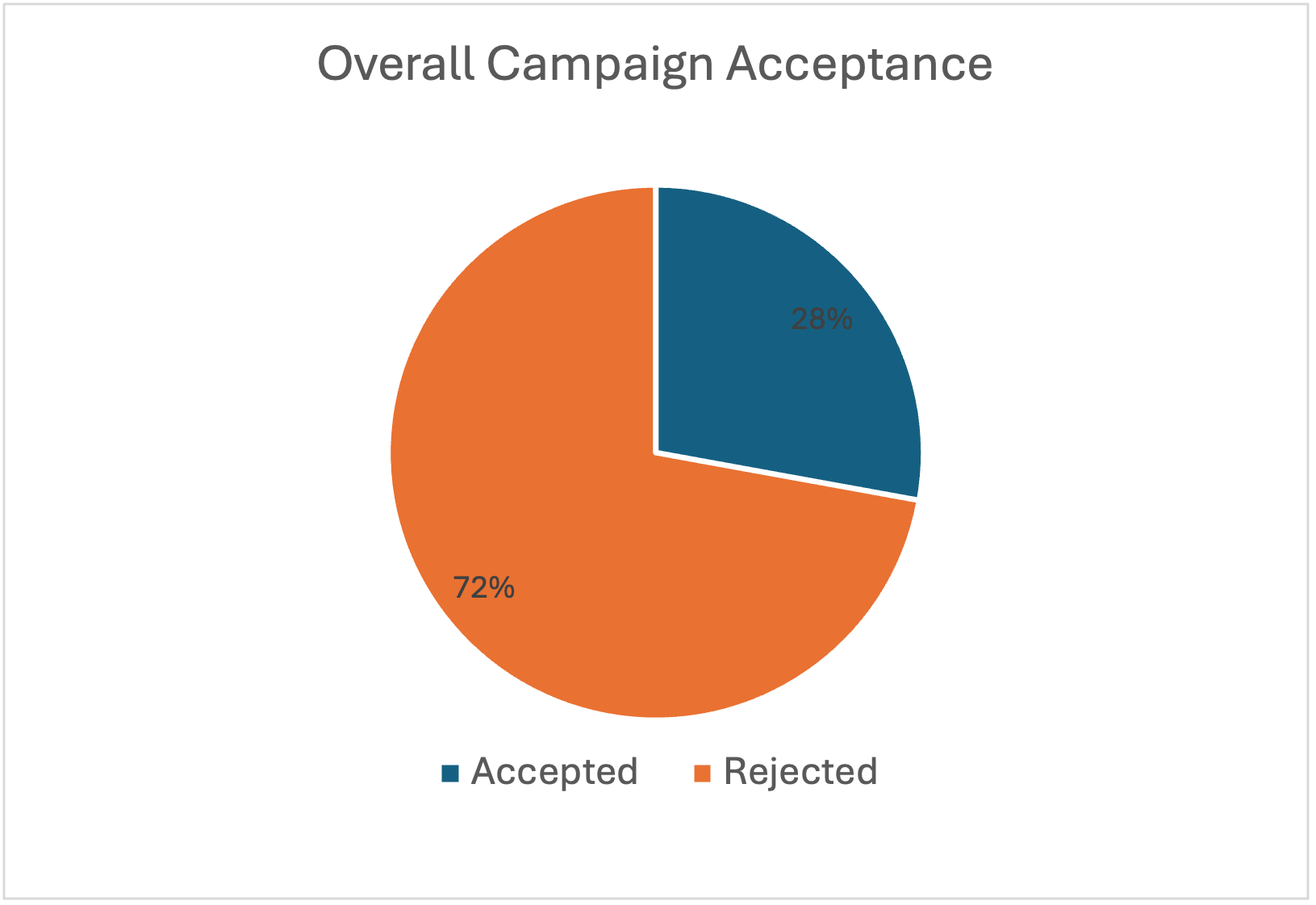
- Around 72% of customers rejected every campaign, indicating that current marketing efforts resonate with only a minority of the base.
- Customers with no children and those with higher incomes spend more and are more likely to accept campaigns, making them core drivers of both revenue and campaign performance.
- Campaign acceptance and spending are noticeably lower among lower-income customers and those with children, suggesting that current offers and messaging are not well aligned with their constraints and priorities.
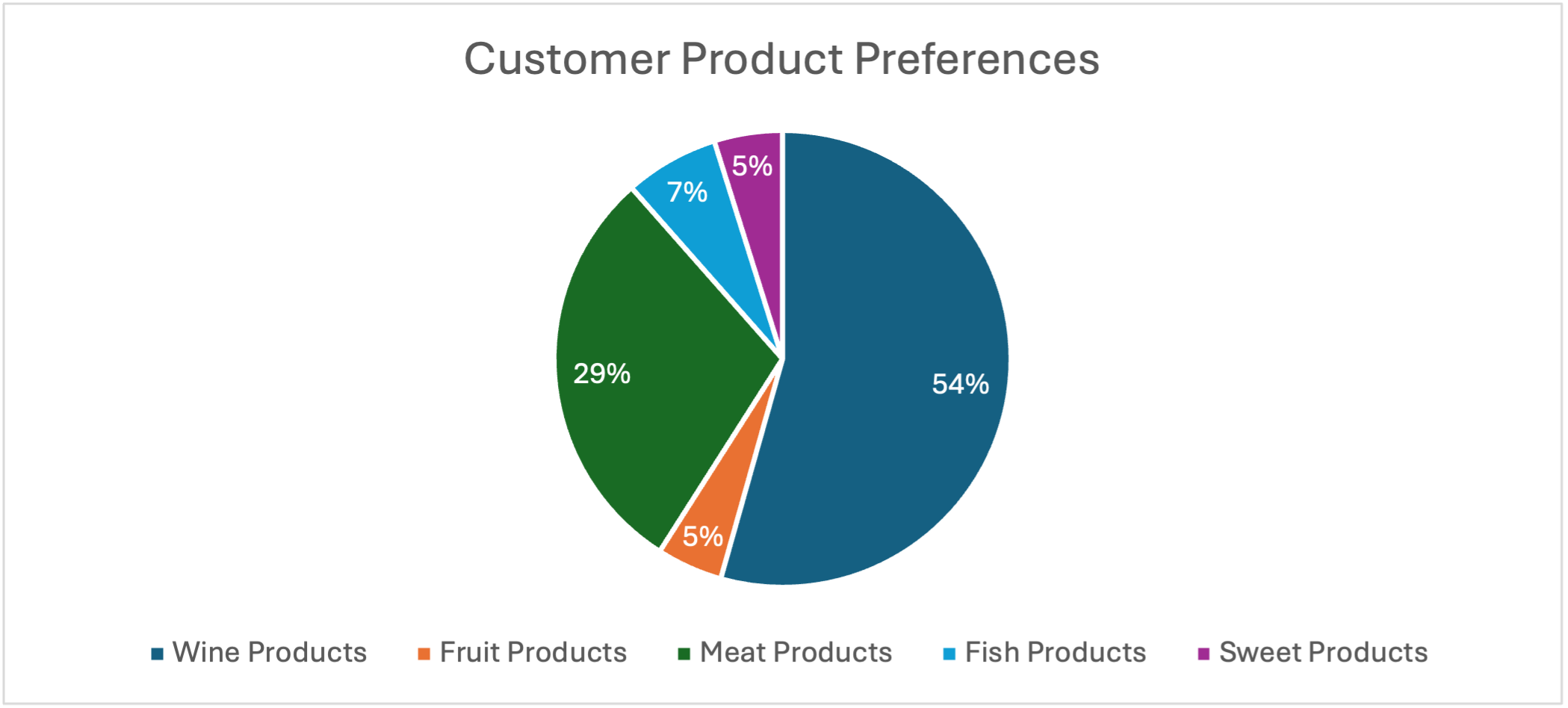
- Two product categories—wine and meat—drive roughly 83% of total revenue, meaning that much of iFood’s income is tied to a narrow set of higher-end purchases.
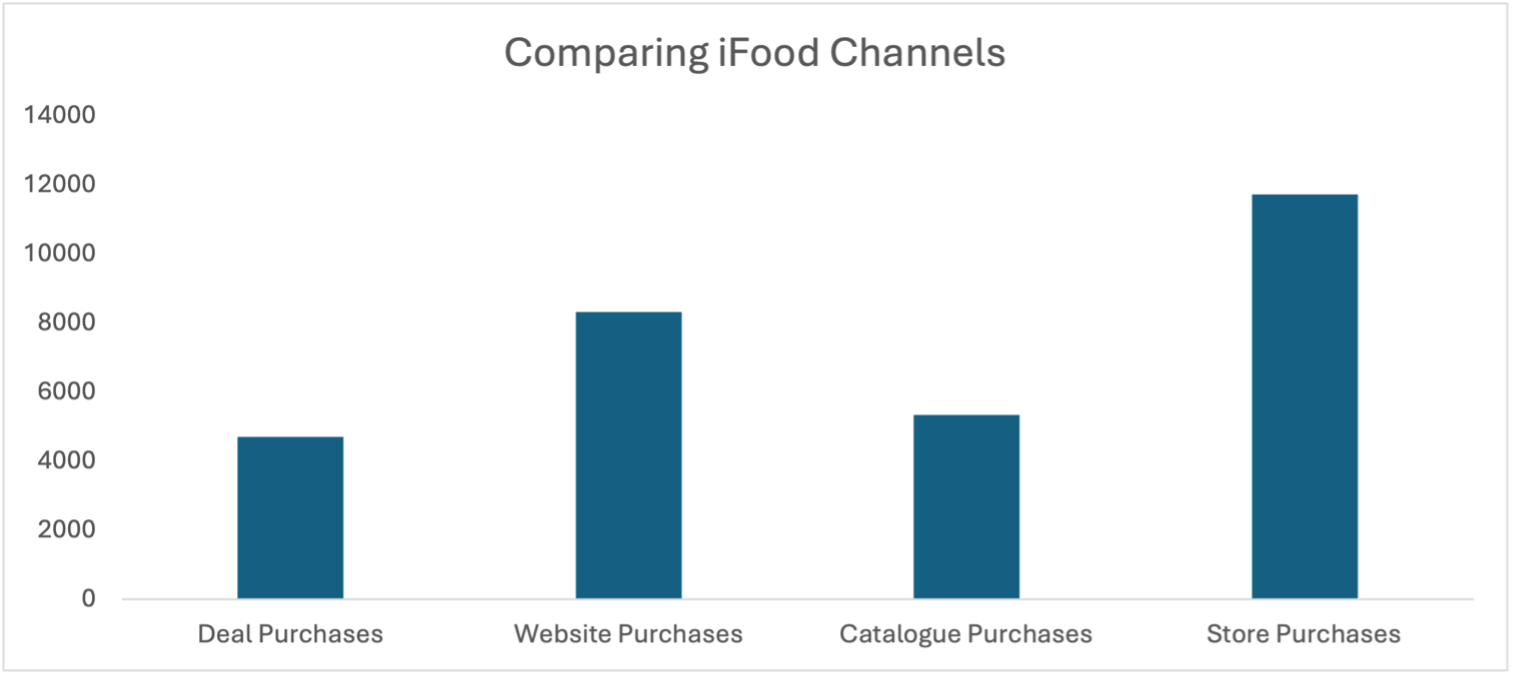
- Web and in-store channels account for about 67% of all purchases, making them the most important touchpoints to optimize for discovery, conversion, and promotion.
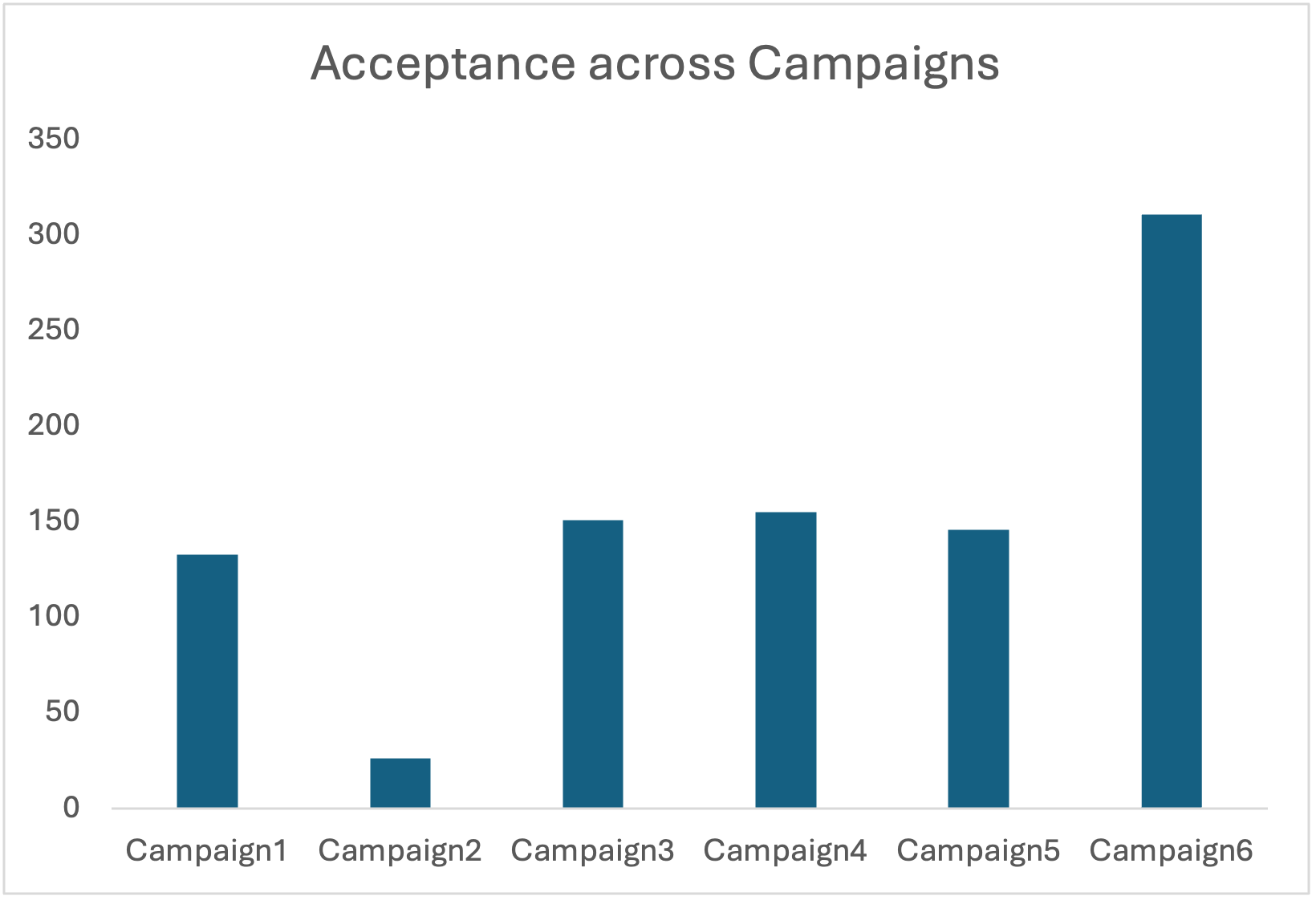
- Campaign 6 was the most successful, reaching about 15% of customers, while Campaign 2 had only about a 1% acceptance rate, highlighting large differences in campaign design effectiveness.
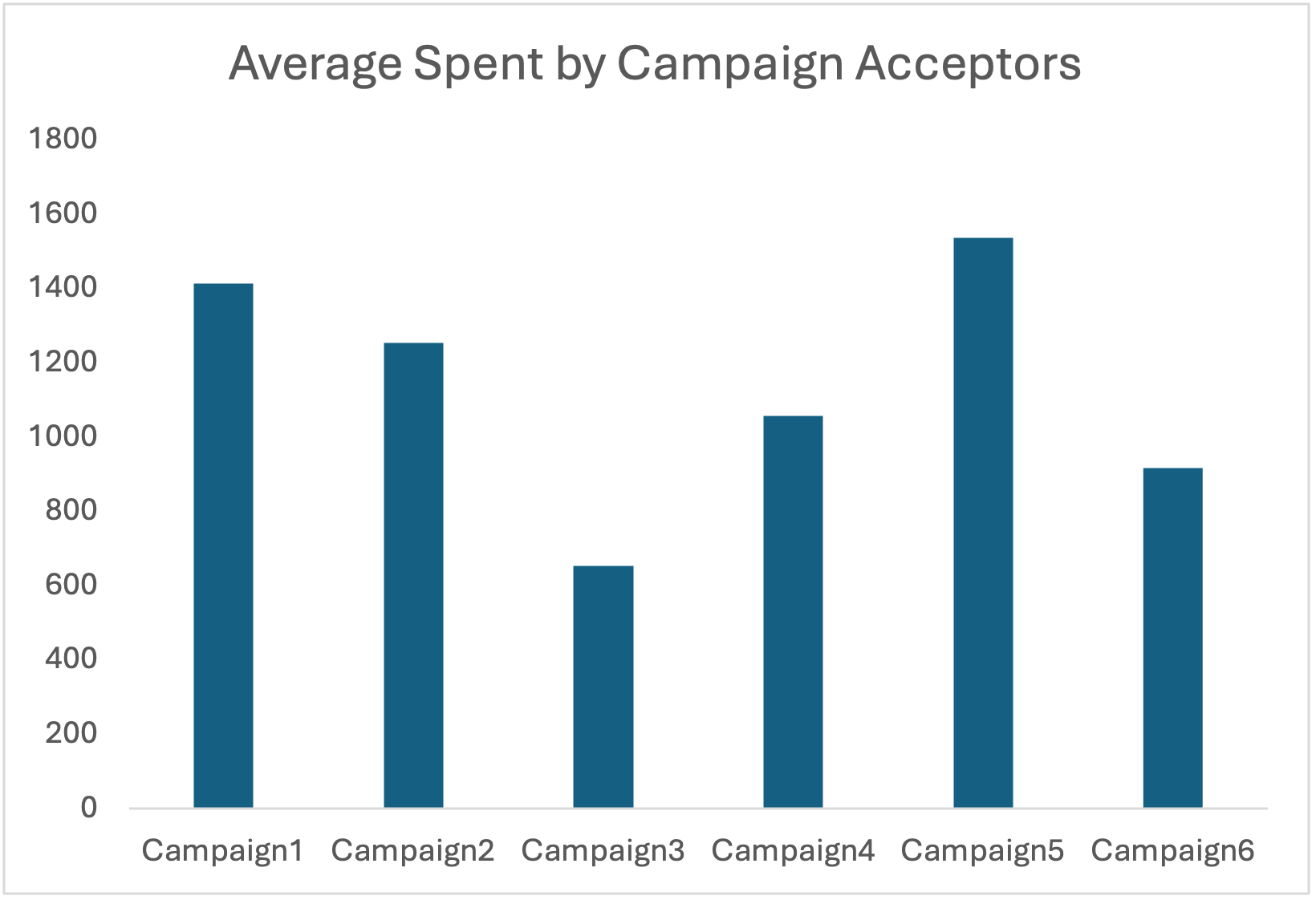
- Customers who responded to Campaign 5 were especially valuable, spending an average of approximately $1,536 each over the period analysed.
- The average iFood customer spends around $563, with roughly $306 on wine and $166 on meat, underscoring how strongly revenue is concentrated in a subset of higher-margin products.
What's Driving Customer Spending
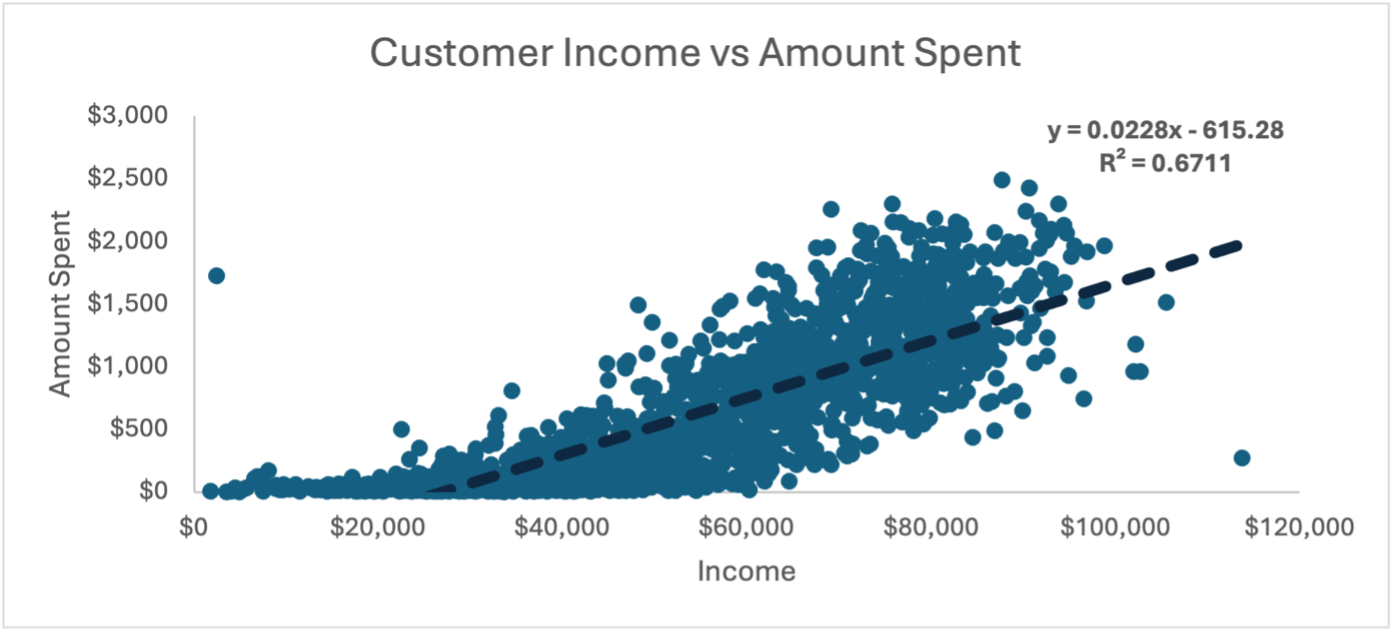
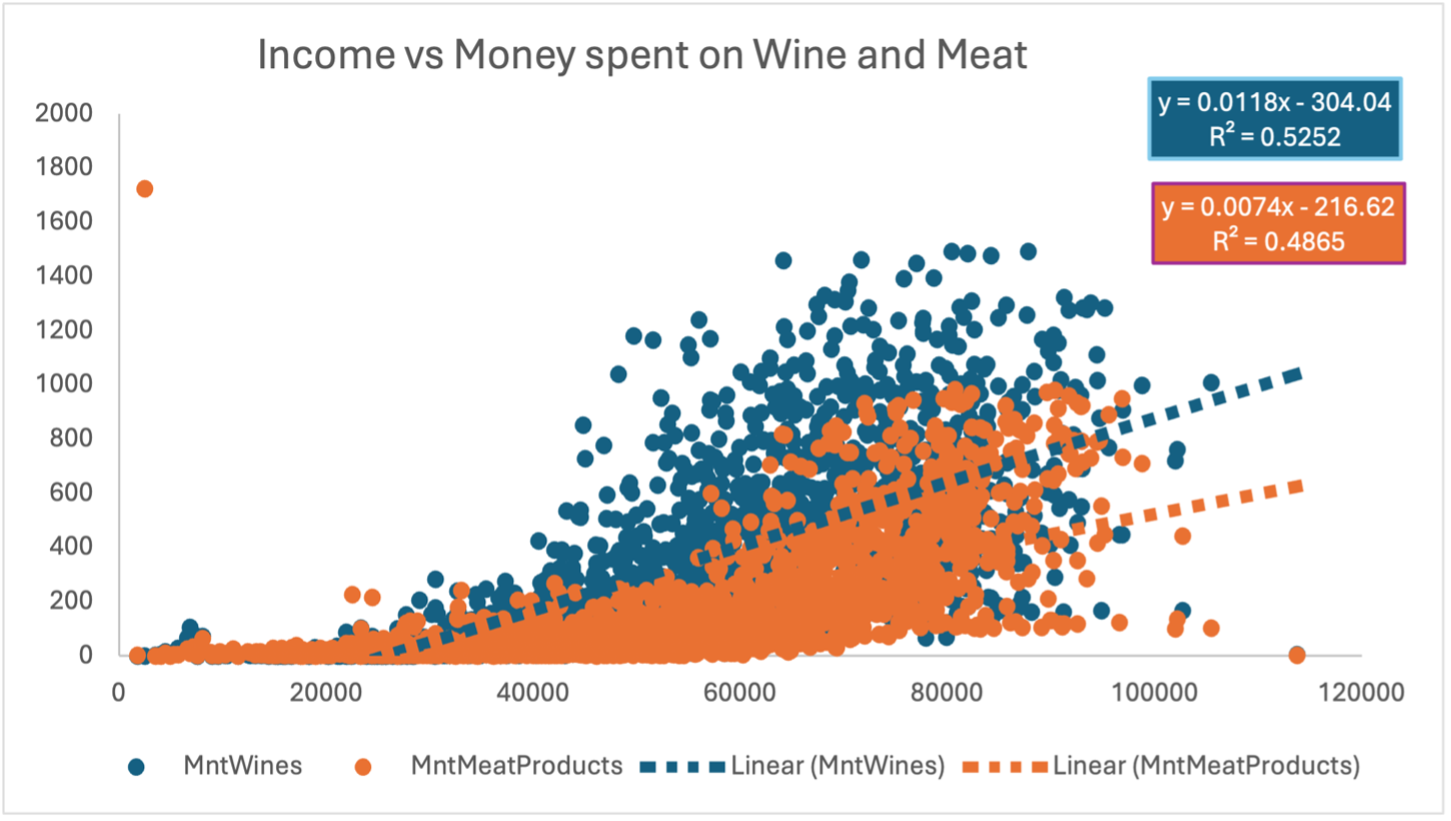
- Customers who earn more are spending more on iFood products [68% of expenditure variance is explained by income]
- Revenue is largely driven by sales of wine and meat [83% of iFood revenue is generate via these products]
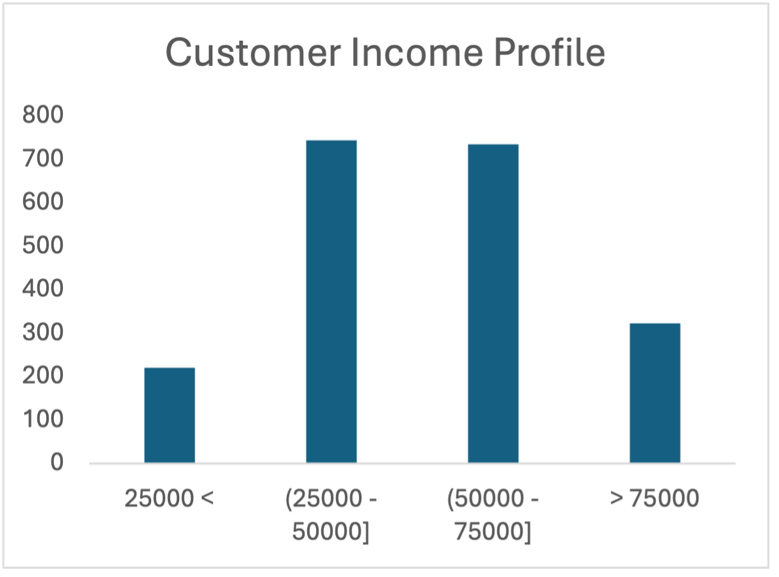
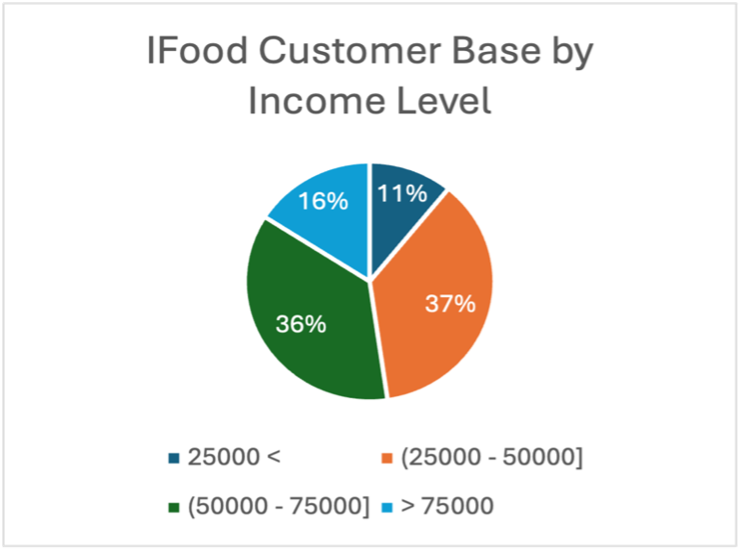
A bivariate analysis shows that as customer income increases, average spend rises sharply. Based on this, customers were segmented into four income bands and their behaviour examined separately. Most of iFood’s customers fall between $25,000 and $75,000 in annual income (about 73% of the base), but the highest income segments contribute a disproportionate share of total revenue.
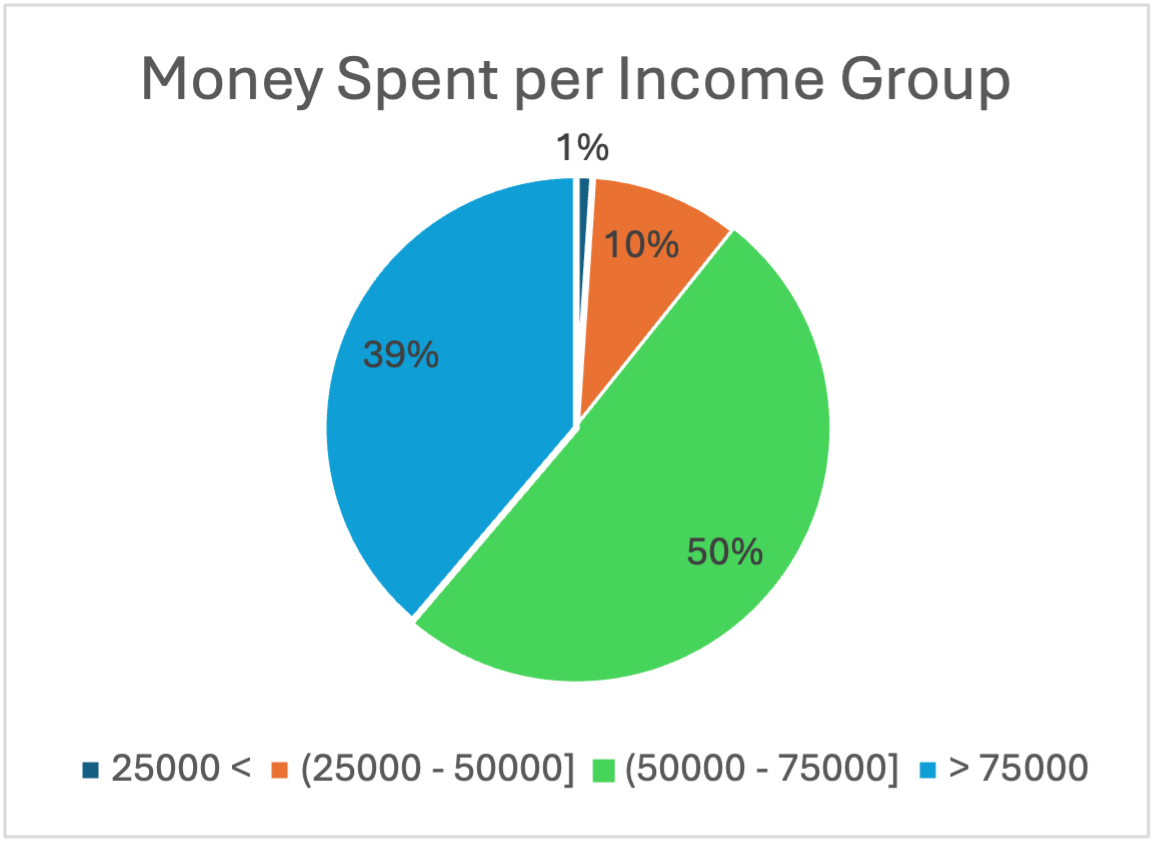
- Those who earn more than $50000 make up 89% of IFood's income while 39% of this is solely attributed to those making more than $75000 a year
Although about 48% of iFood’s customers earn less than $50,000 per year, they generate only around 11% of total revenue. Most revenue comes from customers earning above $50,000, and the highest band—those earning more than $75,000—represents only 16% of the base but about 39% of revenue. This is consistent with the finding that wine and meat sales drive revenue and are strongly positively correlated with income (R = 0.72 and R = 0.70), reinforcing that higher-income segments and premium categories are central to iFood’s current business model.
Income, Campaign Success, and Wine/Meat
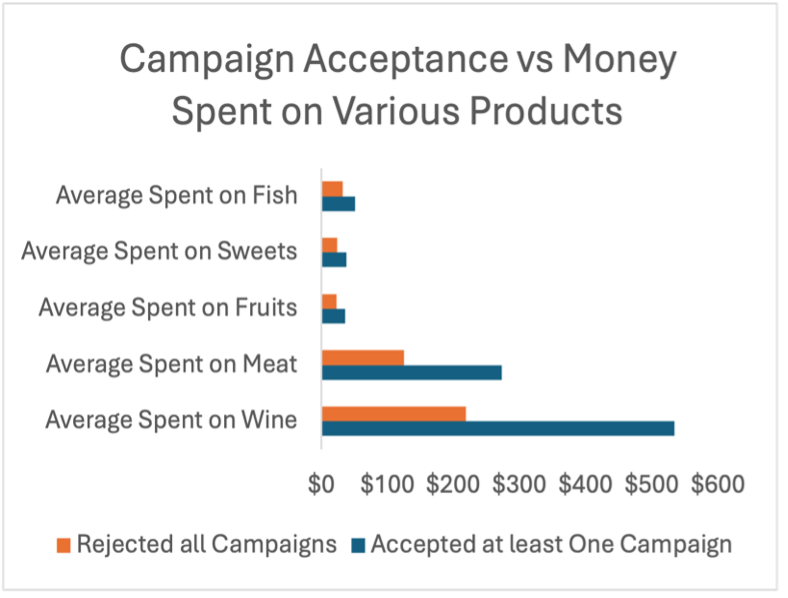
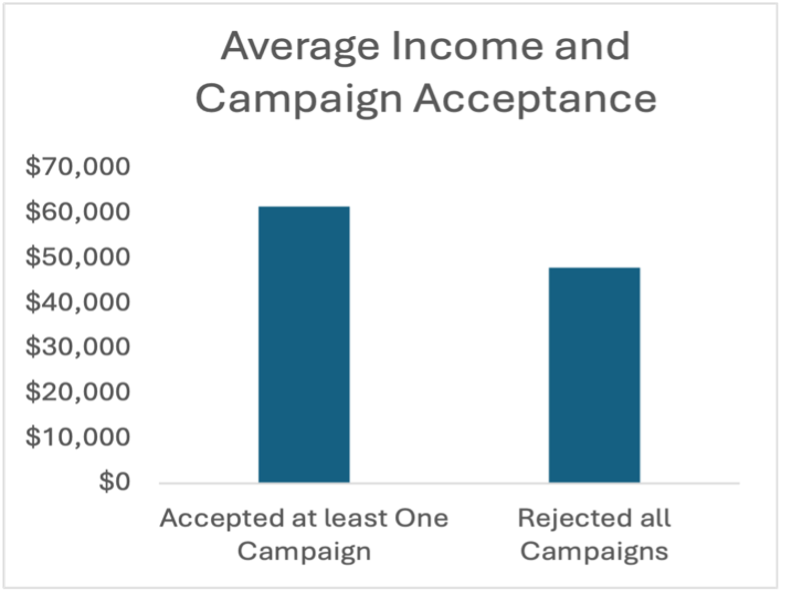
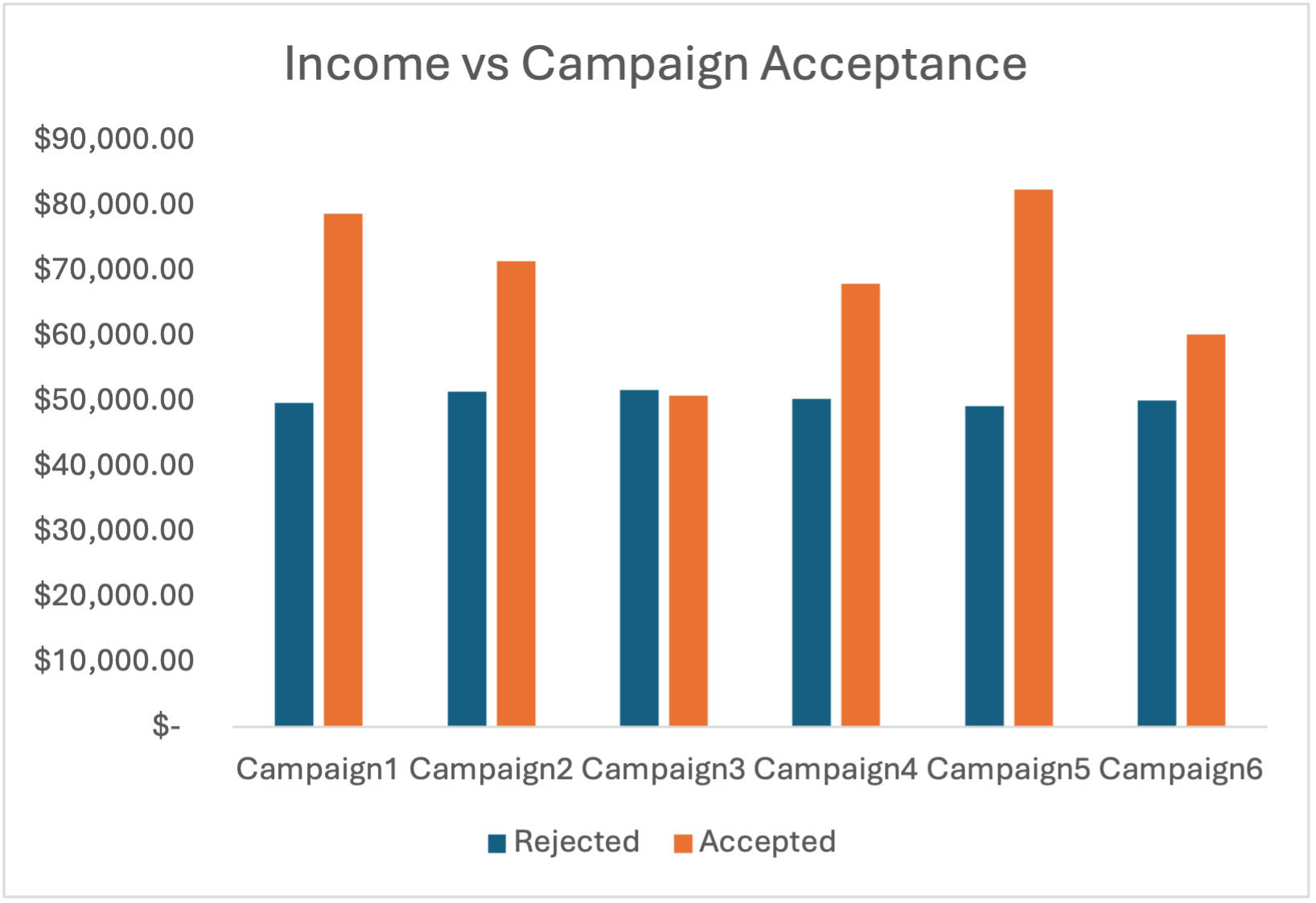
- Customers that accept campaigns tend to be richer and spend more, particularly on wine and meat.
Does Having Children Effect Spending and Campaign Success ?
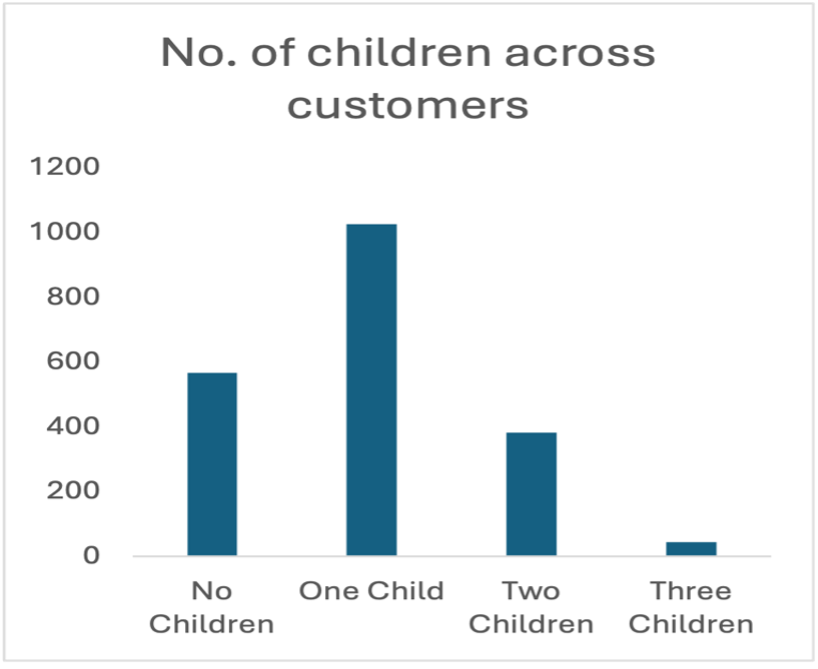
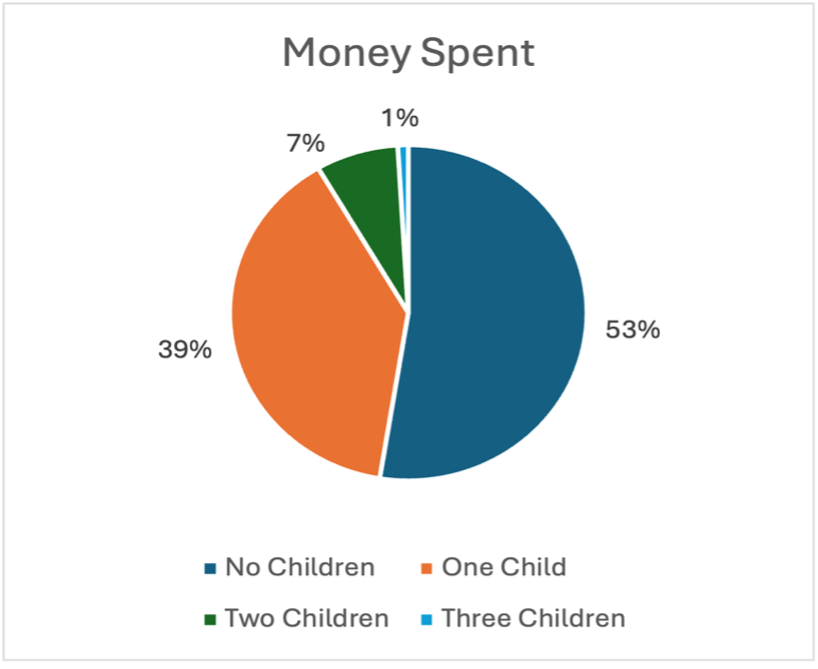
A similar pattern to that seen in the spending habits of high income customers is witnessed in customers with no children
(however this group does also tend to earn more). These customers tend to spend more,
once again particularly on wine and meat, and they are also more receptive to iFood's
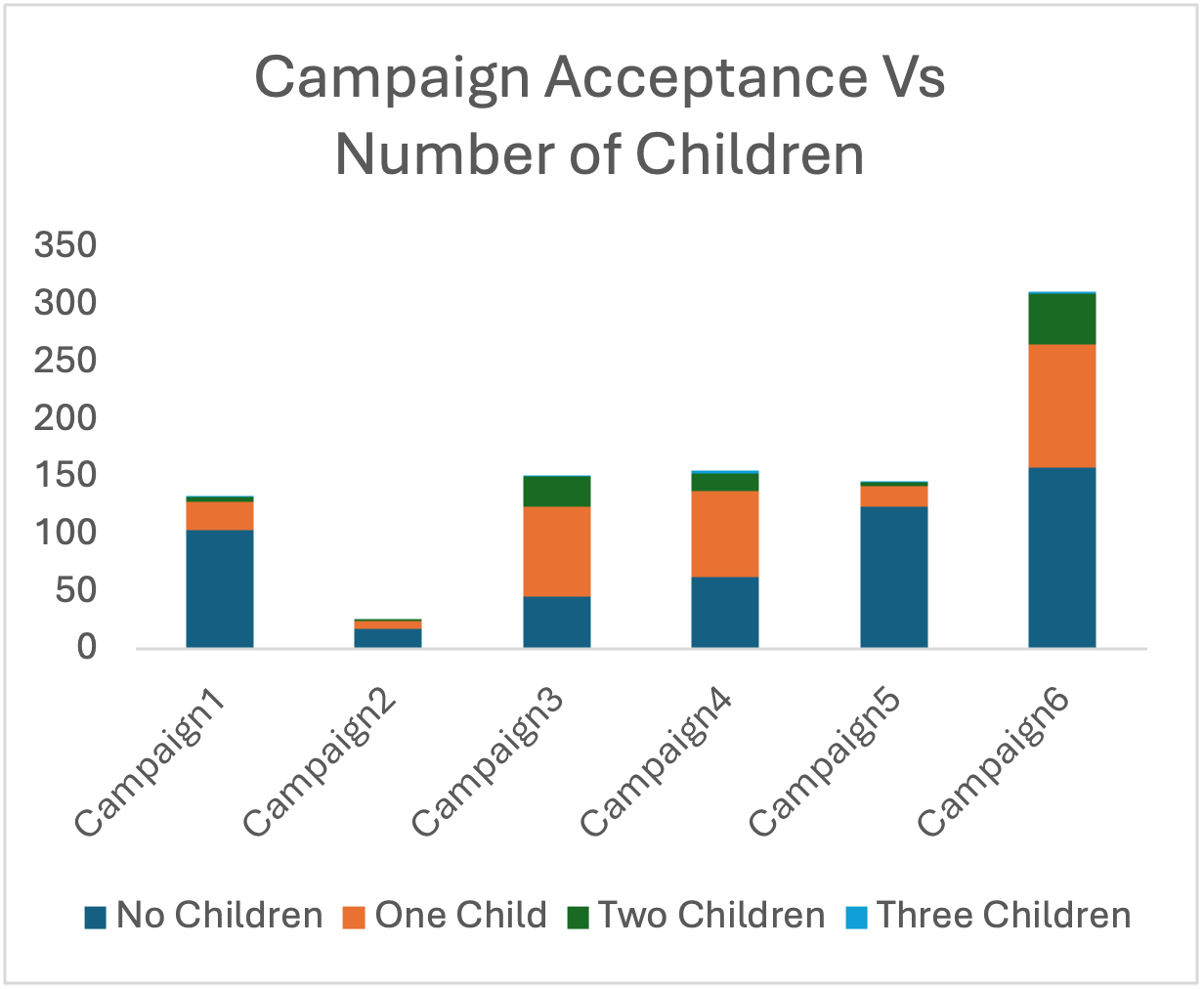
campaigns. Although these customers only make up 28% of the iFood customer base they constitute 53% of its revenue and 46% of the
customers that accepted campaigns. Contrastingly, customers who have children are earning less and are less likely to
accept campaigns. Notably, these effects are more pronounced in those who have kids in contrast to customers who
only have teens.
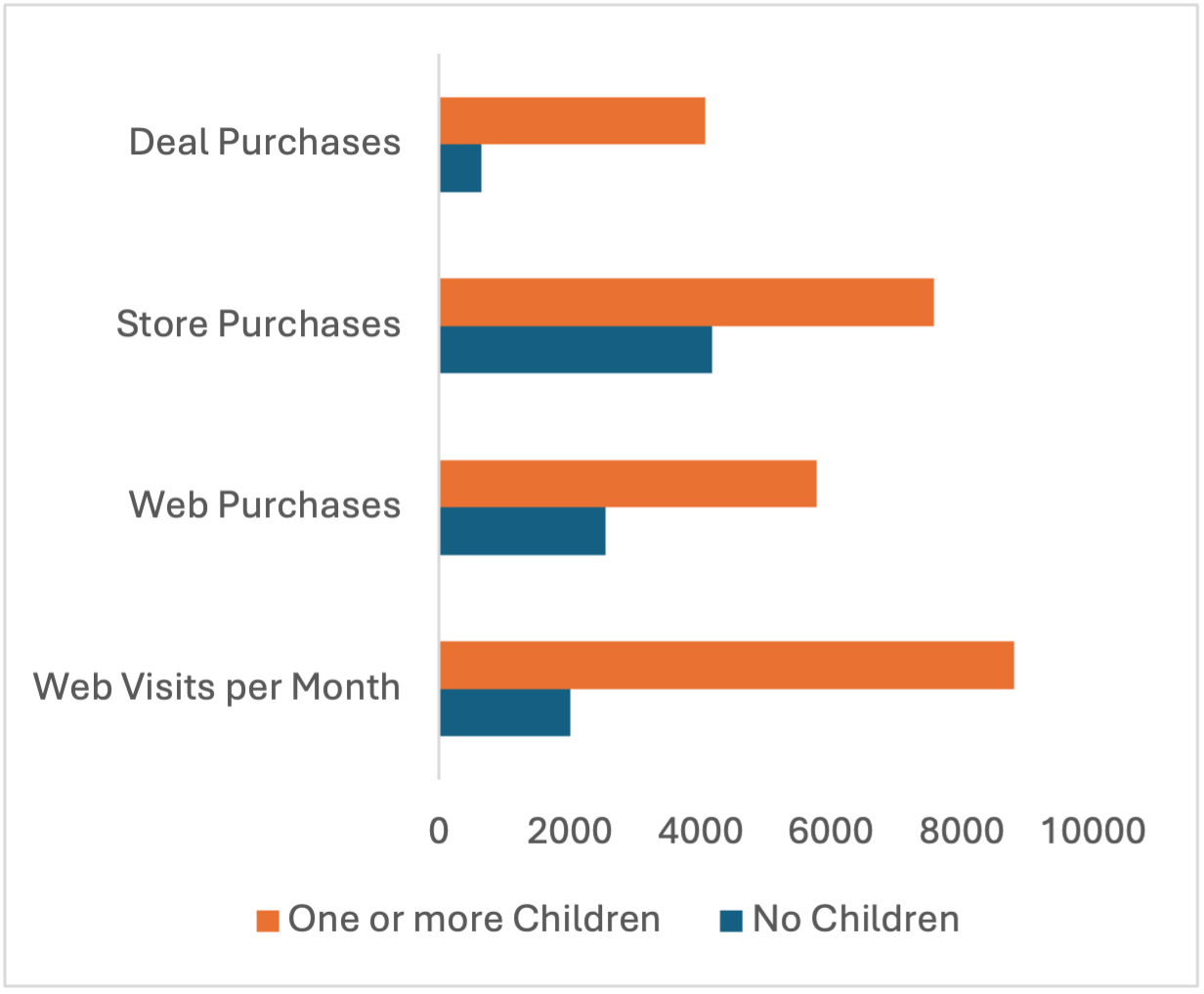
It is noteworthy that those with at least one child still spend a greater percentage of their total purchases on wine,
with 62% of revenue generated in that customer segment attributed to wine sales in comparison to 47% in those who do
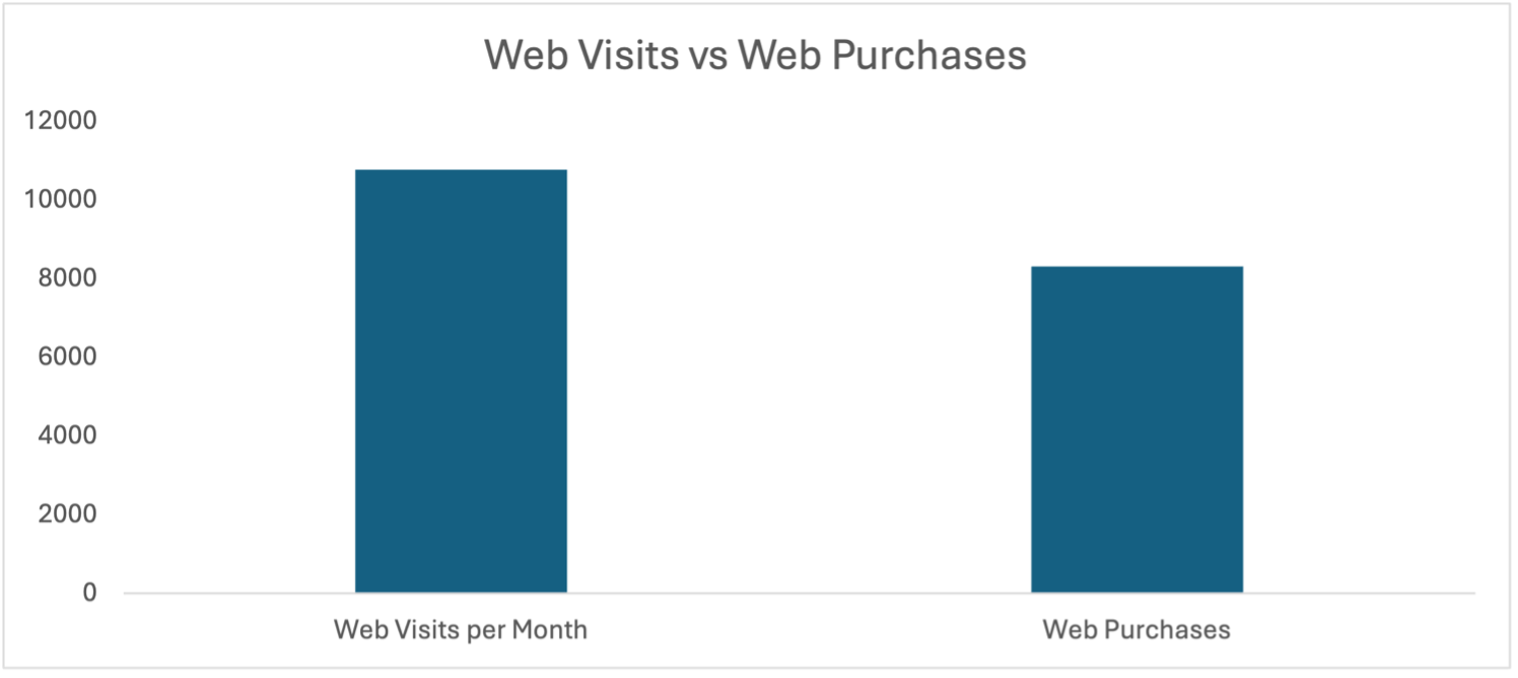
not have children. Moreover, this segment of customers made 4.4 times more web-visits (82% of all web-visits) in
comparison to those with children and prefers making purchases through deal offers (86% of all deal purchases).
However, the increased web-activity of this segment does not translate to an increase in web purchases, with an average
of 0.66 purchases per visit in comparison to an average of 1.28 purchases per visit seen in those with no children.
Evaluating iFood Distribution Channels
What's happening with the campaigns ?
Overall, only 28% of iFood’s customer base accepted at least one campaign, with the average campaign attracting 11%
of customers. Among these, campaign 6 was the most successful, and attracted 254% more customers (311 in total)
than the campaign average prior to it, which was 122. Campaign 2 proved to be the least successful with an acceptance
rate of 1%. As discussed earlier, campaign acceptance is positively correlated with income and a lack of children and
is negatively correlated with having children. Moreover, those who accept one campaign are more likely to accept
another, with 39% of campaign acceptance stemming from customers who had already accepted one campaign prior.
Campaign 5 acceptance was positively correlated with customer expenditure, with an average spend of $1536.
Considerations for the Future
- The analysis suggests that iFood should prioritise a two-pronged strategy focused on (1) deepening engagement with high-income, child-free customers who already drive revenue and campaign success, and (2) redesigning offers and messaging for lower-income families with children, who currently spend less and are less responsive to campaigns.
- - The first should target high income groups without children:
Personalized Campaigns: Develop personalized marketing campaigns highlighting premium products like wine and meat. Use targeted emails and social media
ads that showcase these products' quality and exclusivity.
Exclusive Deals and Membership Programs: Introduce exclusive deals and membership benefits such as priority delivery or special discounts on premium items.
Content Marketing: Create content around wine and gourmet food pairing, recipes, and lifestyle blogs that resonate with high-income customers.
- - The second should focus on low-income groups with children:
Affordable Meal Plans and Deals: Offer budget-friendly meal plans and deals that are family-oriented. Emphasize value for money, and convenience.
Partnerships with Schools and Family-Oriented Brands: Collaborate with schools, childcare centers, and family-oriented brands to offer promotions
and educational content about healthy eating for families.
Seasonal Campaigns and Promotions: Run seasonal campaigns during school holidays, back-to-school periods, and festive seasons that cater to
families with children.
- Wine and Meat are the most successful products, generating 83% of total iFood sales, sales of less popular products need to be increased.
Bundling and Cross-Selling: Create bundles that include popular items (like wine and meat) with less popular products to encourage customers to
try new items.
Discounts and Flash Sales: Run flash sales and discounts on less popular products. Highlight these offers on the main page of the app and website.
Customer Reviews and Testimonials: Encourage customers to leave reviews and testimonials for less popular products to build trust and interest
among potential buyers.
- Web and store purchases are the most successful channels; thus, advertising should take place and focus on these channels in order to increase customer engagement:
Enhanced Web Experience: Improve the web experience with an intuitive interface, faster load times, and personalized recommendations based on browsing
history and previous purchases.
In-Store Promotions: Use in-store displays, flyers, and promotions to drive attention to ongoing campaigns and less popular products. Employ QR codes
that customers can scan to learn more about products and offers.
Omni-Channel Strategy: Ensure a seamless experience across all channels. For instance, allow customers to view and use their in-store loyalty points and
rewards online.
- Campaign 6 was the most successful, Campaign 2 the least, and Campaign 5 acceptance was positively correlated with iFood revenue:
Campaign Analysis: Conduct a detailed analysis of Campaigns 2, 5, and 6 to understand what worked well. Identify key elements such as the type of offers,
communication channels used, and customer demographics targeted.
Replicate Success Factors: Apply the successful strategies identified from these campaigns to future campaigns. Customize the approach based on the target
audience for each campaign.
A/B Testing: Implement A/B testing for campaign elements like subject lines, visuals, call-to-actions, and offers to continuously optimize campaign
performance.
- Website visits per month are negatively correlated with website purchases. iFood should Investigate customer behavior on website and attempt to
increase customer website visit to purchase ratio:
Behavioral Analytics: Use tools like Google Analytics and heatmaps to understand user behavior on the website. Identify drop-off points, popular pages,
and areas for improvement.
Personalized Recommendations: Implement AI-driven personalized recommendations based on browsing and purchase history to increase the website
visit-to-purchase ratio.
Streamlined Checkout Process: Simplify the checkout process to reduce cart abandonment. Offer multiple payment options and ensure the process is mobile-friendly.
General Recommendations:
- Loyalty Programs:
Introduce a robust loyalty program that rewards customers for frequent purchases, referrals, and engagement with campaigns. Offer points that can be redeemed
for discounts or exclusive products.
- Innovative Payment Solutions:
Offer flexible payment solutions such as Buy Now, Pay Later (BNPL) and subscription models for regular deliveries of essential items.
- Sustainability Initiatives:
Promote sustainable practices by offering eco-friendly packaging, and sourcing products from sustainable suppliers. Highlight these efforts in marketing campaigns
to attract environmentally conscious customers, who tend to be higher income, have the ability to spend more, and make up the majority of iFood revenue.